



“Escoffier has helped me to achieve my goals. By the time I graduated, I was so confident to start my own restaurant.”*
Arnold Safari, ESCOFFIER GRADUATE & OWNER, EAT ZAWADI RESTAURANT
Professional-Grade Toolkits Featuring ZWILLING products
Carefully curated with essential cutlery and tools to help you hone your craft
Food Entrepreneurship Diploma
60 Weeks

6-week Class Blocks

54 weeks of
hands-on training

6 weeks of industry training through externship
Curriculum
Multiple classes can occur during one 6-week session.
Culinary Foundations 1
This course begins with food safety and sanitation in the professional kitchen, including proper hygiene, food handling, food storage, cleaning, pest control, in a food service operation. Students become acquainted with tools, utensils, and equipment in professional food service and discuss kitchen layout. Fundamental knife skills, cutting techniques, and the concept of mise en place are covered. Production of stocks, soups are included along with an introduction to grain and legume cookery. And introduction to the role of heat in various cooking techniques rounds out a foundational knowledge in culinary arts.
Foodservice Management
This course covers the different types of commercial foodservice operations, and how to manage each using the principles of good service. Students study the hierarchy of management in foodservice, and the skill needed to succeed as a manager: training employees, motivating them, disciplining them, and creating a safe and positive work environment. The course also explores how to act responsibly and make decisions that benefit the company.
Culinary Foundations II
This course offers a deeper level continuation of understanding of foundational culinary skills. Students will be introduced to various dry-heat, moist-heat and combination-heat cooking techniques, as well as understand the role of the five Mother Sauces in cuisine. A greater emphasis on knife cuts and accuracy is focused upon, and plating and presentation are introduced to give students the basic skills necessary to advance in a culinary arts education.
Food Styling and Photography
Students have the opportunity to learn professional photography techniques using the camera that is always close by – their smartphone! Beginning with an introduction to photography, the course explores how food styling and photography props, lighting, and overall composition can make your food come alive in social media.
Doughs and Leaveners
This course covers ingredient function, leavening agents and mixing methods related to doughs with an emphasis on understanding bakeshop techniques to produce savory results. Production of quick-doughs and batters, flatbreads, yeast-raised-doughs, various formations and related accompaniments.
Social Media Content Development
Students have the opportunity to explore the world of content creation as part of the overall promotional strategy. The course focuses on creating content goals, understanding relevant platforms, and target audiences. Students then create a publishing schedule and discuss amendments to the schedule and calendar based on performance analytics.
Purchasing & Cost Control
Three out of five foodservice operations fail within five years of opening, often due to money mismanagement; this course gives students the skills to not only keep their restaurant in business but also turn a profit. This course introduces students to purchasing, receiving, inventory management and menu pricing. Students learn how to minimize costs and maintain a full range of customer services. The course progresses from the fundamentals of culinary math into an overview of storeroom operations, inventory, portion control, as purchased and edible portions, ingredient conversions, and recipe costing.
Western European Cuisines
Students have the opportunity to gain an understanding of Western European cuisines by exploring history, traditional and indigenous ingredients, flavor components and cooking techniques. Application of classical and contemporary cooking techniques, plate design, and application of proper sanitation techniques.
Menu Design and Management
This course explores creation and application of various types of food and beverage menus. The course covers all aspects of menu planning and design, ranging from visual design to price analysis to making use of available resources. The menu is both a financial tool and a communication tool, and students learn about its uses as both.
Food Blogging and Recipe Development
This course gives students an introduction to creating a food blog to serve a niche market and discusses methods to enhance the success of the blog through sharing recipes specific to the business. The course focuses on keywords, search engine optimization, revenue generation, and creating blog posts to combine the techniques covered in class.
American Regional Cuisine
Students have the opportunity to gain an understanding of American Regional cuisine by exploring history, traditional and indigenous ingredients, flavor components and cooking techniques. Application of classical and contemporary cooking techniques, plate design, and application of proper sanitation techniques.
Hospitality Marketing
This course identifies marketing orientation as a management philosophy that guides the design and delivery of guest services in the organization. It explores marketing themes unique to hospitality businesses along with established general marketing principles. Helps students become better at understanding, predicting, and influencing consumer behavior through theoretical knowledge and applied strategies.
Culinary Entrepreneurship
This course is a culmination course in entrepreneurship. This course covers such topics as business planning, pricing, credit management, government regulation, and legal concerns. Business ethics and the crucial role and importance of management and leadership are also covered.
Externship I
This course provides opportunities for real life experiences in an operational restaurant or related business and builds on the skills and techniques covered in previous courses. In the course, students apply the skills they have learned in practical ways to real-world situations. Students gain hands-on experience in the kitchen that mirrors their future work in the industry while developing necessary career skills. Immersion in a work environment also allows students to develop industry contacts and build working relationships. Externship courses are specific to the area of program concentration and must be completed for each concentration in which a student is enrolled. Externship must be completed for each new program enrollment.
Program Highlights

INDIVIDUAL MODERNIZED
INSTRUCTION

CONNECT WITH YOUR CHEF INSTRUCTORS

TEN 6-WEEK
TRAINING BLOCKS

100% ONLINE CLASSES
WITH A HANDS-ON INDUSTRY EXTERNSHIP

ENTREPRENEURIAL
CURRICULUM

KITCHEN LAB:
HANDS-ON ASSIGNMENTS

PRACTICAL SKILLS &
OPERATIONAL AWARENESS

EMPHASIS ON Foodservice Management & COST CONTROL

CAREER PLANNING
AND PREPARATION

“I wanted to enroll in culinary school to refine my skills, with aspirations to expand the food truck business. I needed more training in restaurant management, efficiency in the kitchen, cutting skills, and all other proficiencies that come with working in a professional kitchen. [Escoffier] also helped me feel more comfortable working with such respectable chefs at a very early stage with business.”*
Nahika Hillery, ESCOFFIER GRADUATE & OWNER, KREYÓL KORNER CARIBBEAN CUISINE FOOD TRUCK
Tuition
Total Program Cost:
$23,980*
No Application Fee!
*The total program cost listed above encompasses tuition, tool kit, uniform, and an optional non-refundable technology fee if you do not already have a computer. As textbooks are delivered electronically, the cost of books used in the program and available online to the students are included in the tuition cost. For more cost details, refer to our catalog.
Access to the right technology will be vital to your success at Escoffier.
If you do not currently have access to a computer, we highly recommend purchasing one before your start date. Chromebook computers are typically a very affordable option, and will meet all requirements of our programs.
How do I get a Chromebook?
You can get a Chromebook in any one of the following ways:
Purchase from a retailer:
Walmart offers many options, and some of their Chromebooks even include monthly finance plans.
Amazon is another retailer that offers a variety of Chromebook options at affordable prices.
Purchase one in-person. Walmart, Target, Best Buy, and other large stores sell Chromebooks in-store. This option allows you to bring your Chromebook home that same day.
Purchase through Escoffier:
If you’re unable to purchase directly from a store or retailer such as Walmart or Amazon, talk to your Financial Aid Advisor to find out more about buying one through Escoffier’s Chromebook program for the $250 Technology Fee. Financial Aid Advisors are available at (877) 452-5489 Option 1.
Please note that if you purchase your Chromebook yourself, you will not pay the $250 Technology Fee.
FINANCIAL AID IS AVAILABLE FOR THOSE WHO
APPLY & QUALIFY.
School Code: 037763
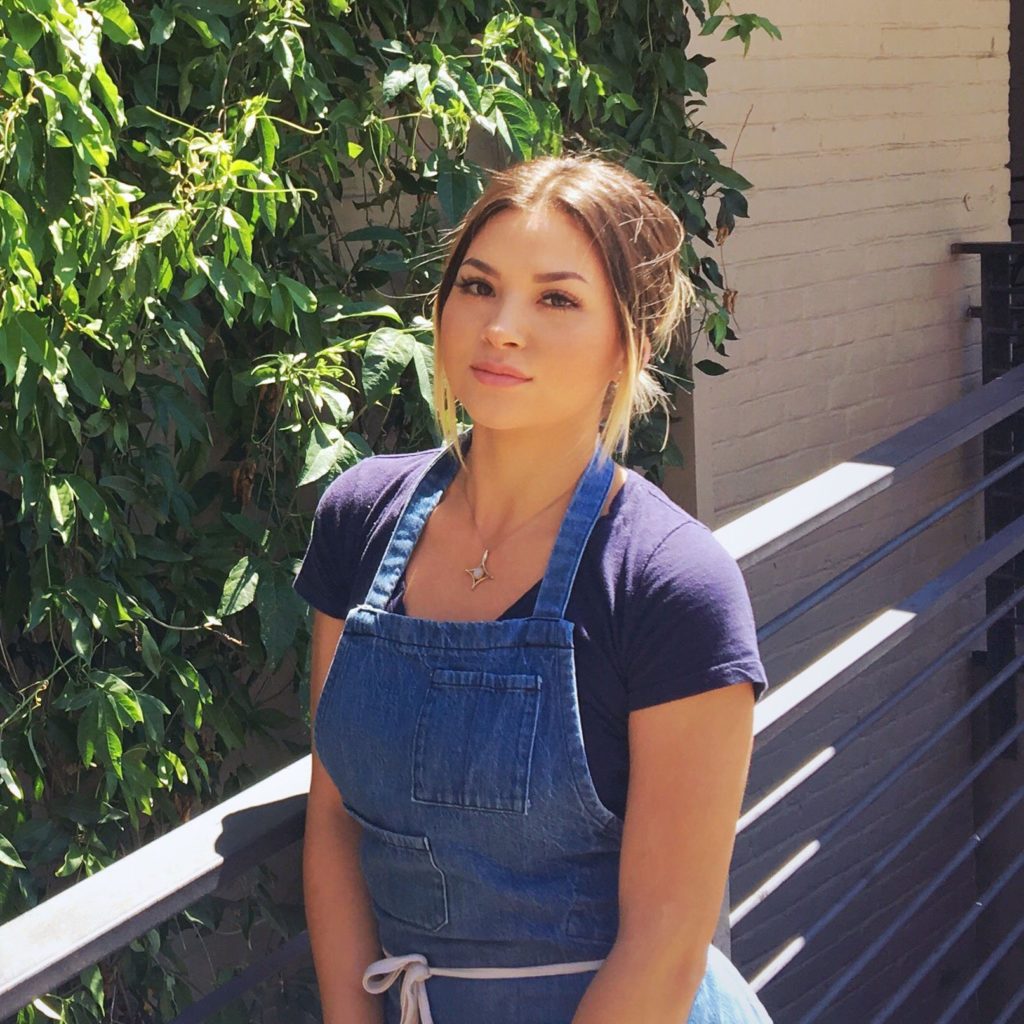
“I feel my experience at the school has truly gotten me on the right path. I feel supported in a way no other school has ever offered. It’s reassuring to know I have a sounding board for my career decisions.”*
Maria Rodriguez, ESCOFFIER GRADUATE
A Typical Week at Escoffier
Approximately 15-23 hours per week is spent on school related activities depending on program, credential, and personal pace.
The week runs from Wednesday to Tuesday with weekly due dates for student work.
Each week’s assignments will be broken into categories of learn, discuss and experience.
LEARN
Each week will begin with assigned reading via our online platform. Students will also watch the recorded chef demos for the week here.
DISCUSS
Students participate in discussion boards where the class responds to topics and questions the chef posts in regards to what you’re learning that week. There will also be live lessons held through a video platform each week. Live Sessions are your opportunity to interact with your chef and classmates. Students who attend or watch the archive generally perform better in school.
EXPERIENCE
This is where students turn their kitchen into their classroom lab, and cook! With all the prep work completed, students can now work through assignments by following our production sheet from start to finish, taking photos where instructed to.